|
Let PLANETPALS teach you about Clouds,Rain, Snow, Rainbows, Earthquakes and Tsunami!
|
Sun, Fog, Frost or Rain. The Weather Is Always Around Us
|
 |
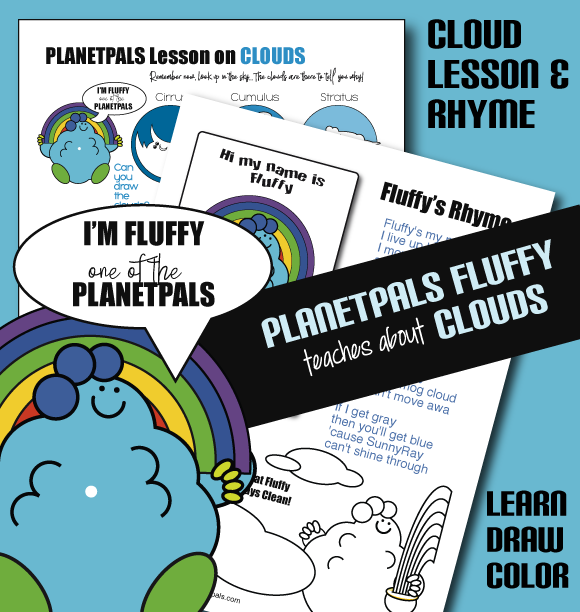
Let Planetpals FLUFFY Teach You About The Weather |
Fluffy says"There are many kinds of clouds you see--like cirrus, cumulus, stratus for three!"
Scientists who study weather are called meteorologists.
They look at the temperature, air pressure, winds and clouds and tell us whether to expect rain or cold air. Meteorologists have names for different kinds of clouds. These names describe what the cloud looks like and how far above the ground the cloud is.
|
Clouds:
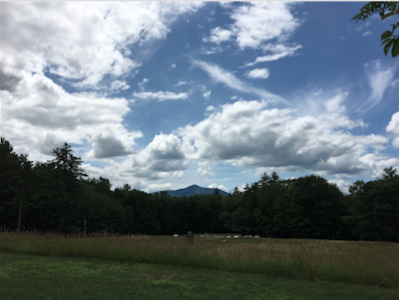
Look up into the sky on most days and you will see some type of clouds.
Clouds are made when air is cooled to a temperature where water in the air becomes visible. This temperature is called the dew point.
Dust is also needed to form clouds.
The water condenses on the tiny specs; just like the mist in your bathroom condenses on your shower curtain.
As you go higher in the atmosphere, the cooler the temperature gets.
Sometimes clouds are formed because moist air is forced upward over mountains. |
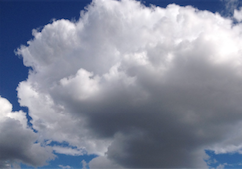
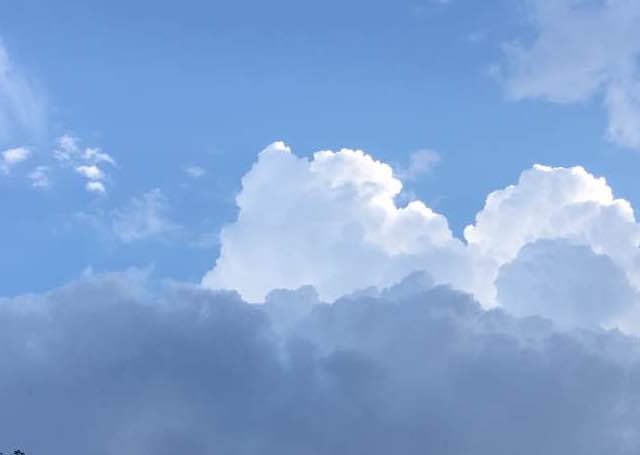
Cumulus clouds are big and fluffy.
 |
Cumulus:
Big fluffy clouds are called cumulus and they can be in any part of the atmosphere.
Special cumulus clouds which bring thunderstorms are called cumulonimbus.
Cumulonimbus clouds are dark because their bases are low, but their tops can reach high up into the atmosphere.
Rain can form in any part of a cumulonimbus cloud. Rain which does not reach the ground is called virga. |
Stratus:
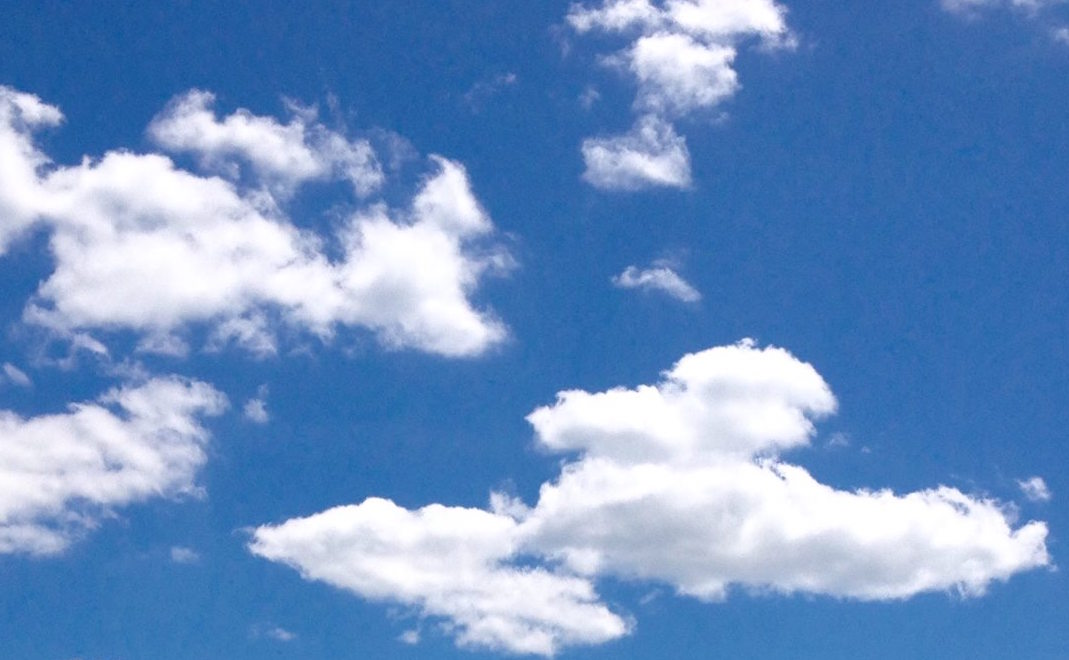
Clouds that are flat and look like blankets in the sky are called stratus.
Rain can also fall from stratus clouds.
If rain is a steady drizzle which lasts for a while, it most likely comes from stratus clouds. |
Stratus Clouds look like a blanket
 |
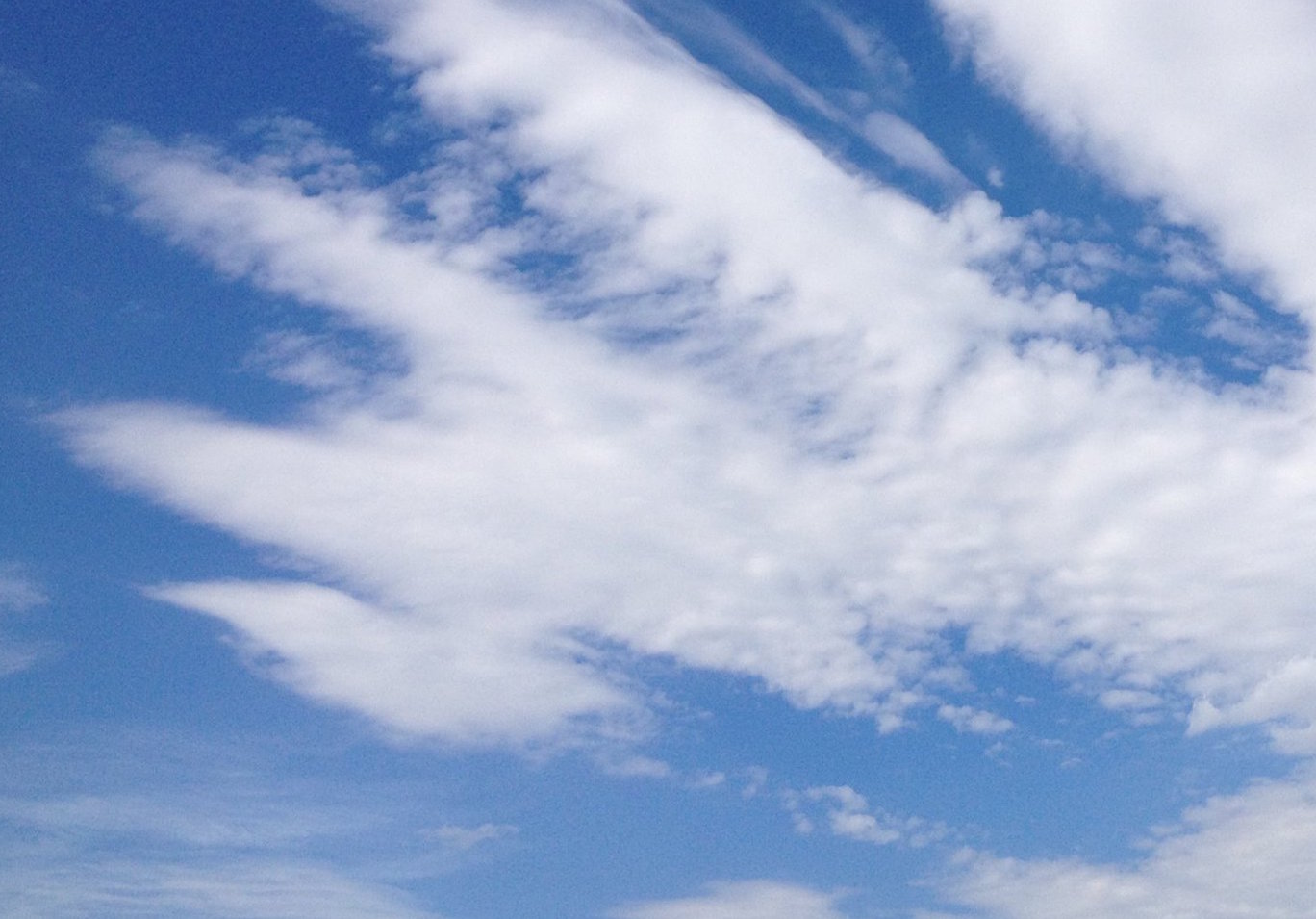
Cirrus clouds are high up in the atmosphere.
 |
Cirrus
Thin, wispy clouds are called cirrus and are usually high up in the atmosphere.
They are made of ice crystals since the higher air is colder. There is not enough moisture in cirrus clouds to cause rain.
You cannot have rain without clouds, and you cannot have rainbows without them either. |
Rain:
Precipitation in the form of rain or snow occurs when particles of water or ice are large enough to reach the ground.
The chief difference between a cloud drop and a rain drop is size. A typical rain drop has a volume that is more than a million times that of a cloud drop. Thus it takes many cloud droplets to make up a single raindrop.
When our atmosphere gets polluted we are susceptible to acid rain. |
H20 says "Rain, Sleet, Snow, It's all comes from me, you know!"  |
 |
|
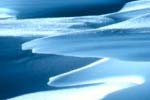
| Snow in Antarctica |
|
 |
|
| Actual Snowflake |
|
Snow:
Snow has a chemical composition of water (H20)
Snow is basically made up of crystals of frozen water (ICE).) Snow is ice crystals and ice crystals have six points. However, one snowflake can consist of multiple crystals. Temperatures must be below freezing (0 Celsius or 32 Fahrenheit) for snow to form.
Snow continues to challenge weather experts.
It is still very difficult to predict and is surprisingly hard to measure once it has fallen. Learn more about snow
|
|
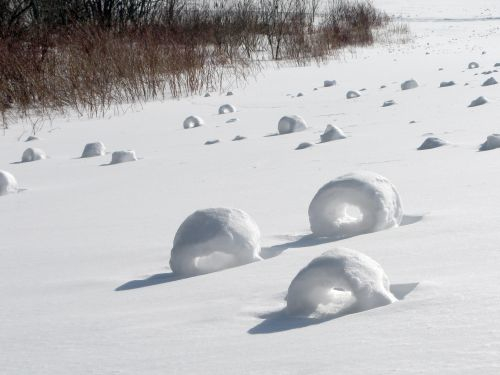
Snow Rollers:
Snow rollers, are snow balls formed naturally by strong winds blowing across a flat, snow covered field. Three conditions have to occur for Snow rollers to occur: The ground must be icy or be covered with a snow crust. Winds must be strong and gusty. A wet snowfall of at least a couple of inches.
Once a snow roller is formed the wind gets it to roll, collecting snow as it moves, in some cases even creating tracks of bare ground. The appearance of a snow roller resembles a scaled down version of those large rolled hay bails, only made of snow.
See more strange Weather and Unusual Natural Occurances |
|
About Rainbows:
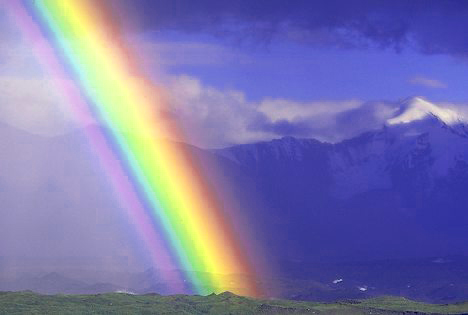
Rainbows are caused by sunlight passing through very small water drops. A rainbow is a REFLECTION and REFRACTION of light.
A rainbow is composed of the entire spectrum of colors of visible light, from the longest wavelength, red, to the shortest wavelength, violet. The order of colors in a rainbow is easiest to remember by the following mnemonic (a formula that helps one remember something): ROY G. BIV. R=red, O=orange, Y=yellow, G=green, B=blue, I = indigo, and V=violet. Red is at the top edge of the rainbow and violet is at the bottom edge, with the other colors in between.
This is why you can make your own mini-rainbow with a garden hose if it has a fine spray. |
Rainbow: light passing through water drops
 |
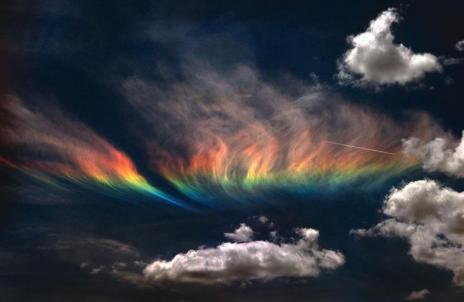
Fire Rainbow
|
Fire Rainbows:
The clouds needed for these rare events have to be cirrus and at least 20,000 feet in the air, with just the right amount of ice crystals. The sun also has to hit the clouds at precisely 58 degrees.
It's just one of the many types of rainbows.
Photo Left: Raymond Lam |
Types of Rainbows:
Rainbows take many forms including: multiple bows, bows that cross, red bows, twinned bows, coloured fringes, dark bands, spokes and more. All due to optics and to the light in the atymosphere Here is a list of the types of Rainbows. Maybe you wil;l be lucky enough to see all of them in your lifetime!
- Multiple rainbows
- Twinned rainbow
- Full circle rainbow
- Tertiary and quaternary rainbows
- Supernumerary rainbow
- Reflected rainbow, reflection rainbow
- High order rainbows
- Monochrome rainbows
- Moonbows
- Circumhorizontal and circumzenithal arcs
|
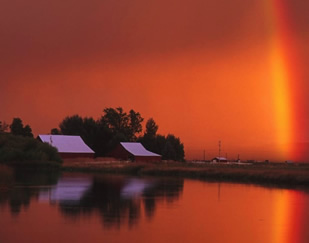
Monochrome Rainbow
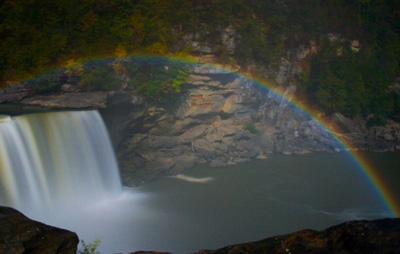
Moonbow Rainbow
|
|
There are many Natural Disasters caused by extreme weather such as Blizzards, Heat waves, Cyclones, Hurricanes, Tornadoes,
Floods, Mdslides, Wildfires, Bushfires.
See more strange Weather and Unusual Natural Occurance:
Natural Disasters non weather related but caused by other natural phenomenon. Natural Disasters include s the effect of a natural hazard such as a Volcano eruption, Tsunami, Earthquake that affects the environment
Strange Weather and Unusual Natural Occurances Learn about Haloes. Sun Dogs, Sun Ghost, Belt of Venus,Noctilucent Clouds,Aurora Borealis,Mammatus Clouds, Red Rain, Moon Bows, Colored Moons, St Elmps Fire, Fire Winds, Pyrocumulus Clouds, Lenticular Clouds, Sun Pillars, Diamond Dust, Non-aqueous Rain, Virga, Katabatic Winds, Fire Rainbow, Green Ray, Ball Lightning, Sprites, Jets, and Elves, Snow Rollers, Brockenspectre, Mirages, Ice Fall / Bomb, Giant Hailstones, Sea Monster or Spinning Water, Gravity Wave, Supercell, Blue Moon. |
|
NEXT:
NEXT:
|